For decades, the conversation about Islam in America
has happened in fragments.
But the conversation that matters has not yet been had.
Pour the iced tea. Sit down. The conversation begins — across ten volumes.
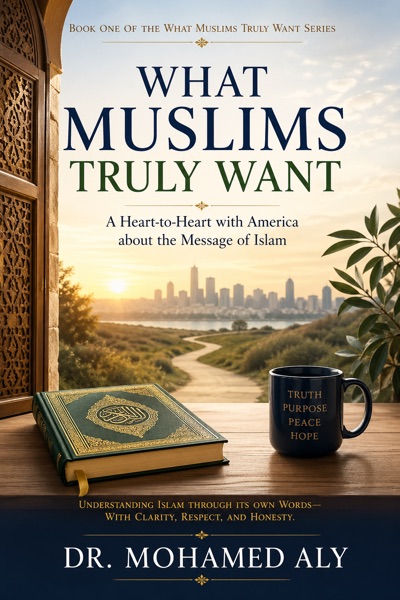
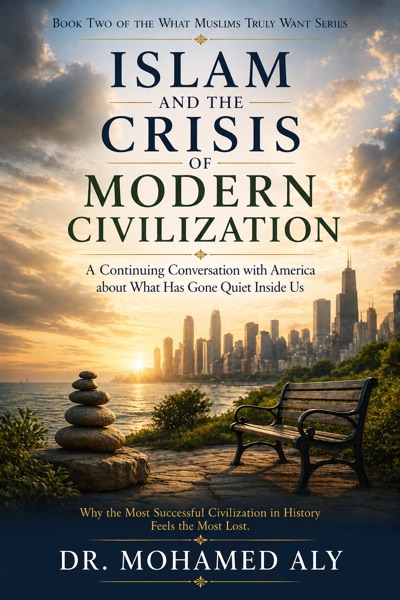
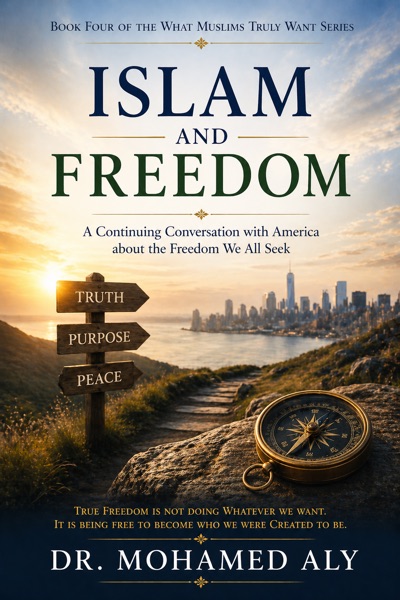
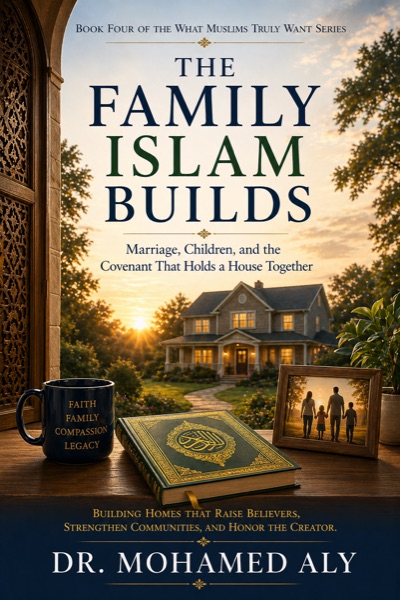
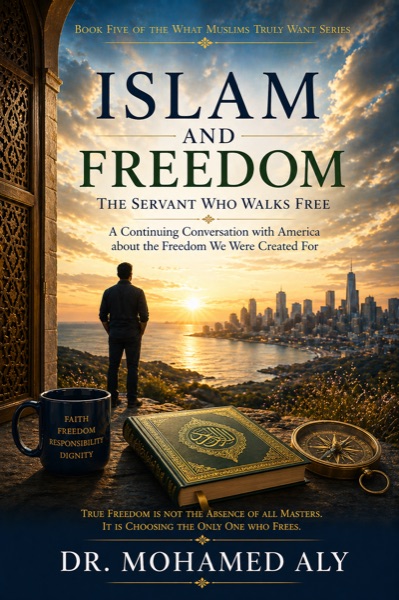
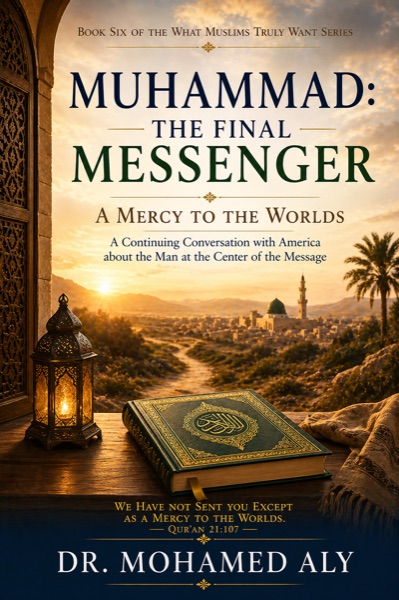
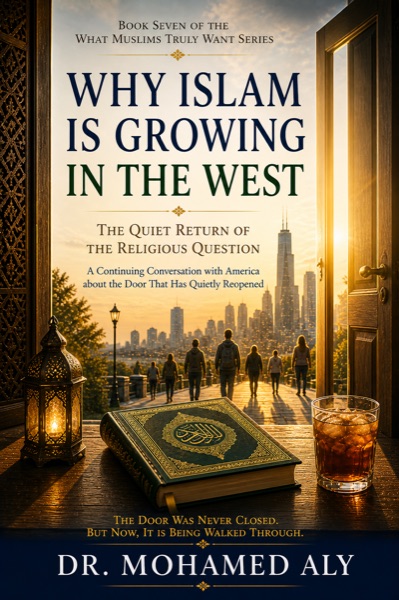
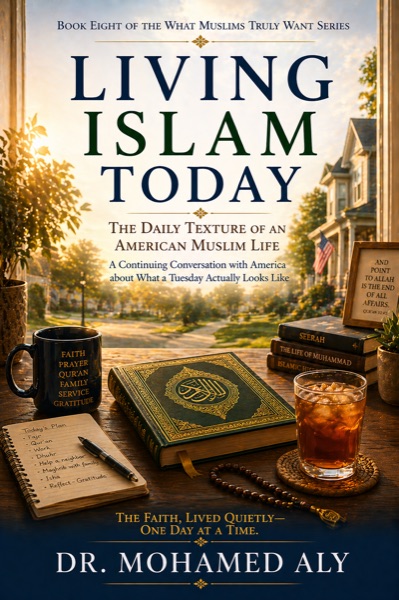
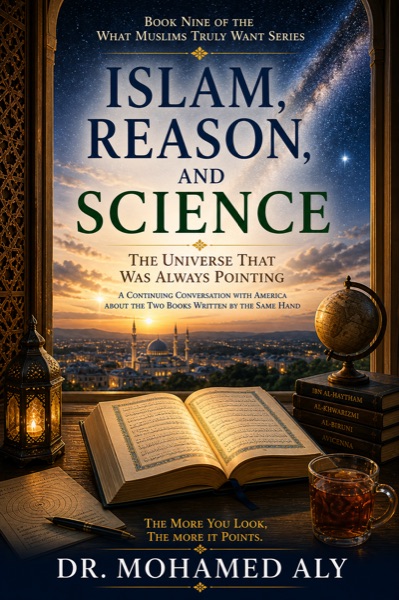
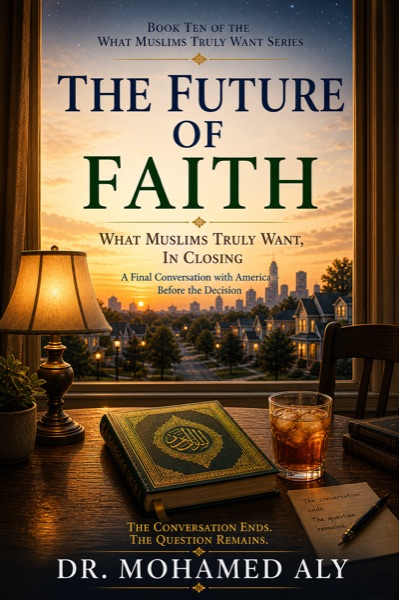
May 21, 2026
Free as a Kindle download for the first ninety days · A new volume every ten days through the summer
Many Americans have formed strong impressions of Islam without ever encountering it directly — not out of negligence, but because the opportunity for a clear, honest explanation has rarely been presented. The shouting has been louder than the listening. The headlines have been quicker than the kitchen table. The slogans have been sharper than the verses.
This series exists to provide what was missing. It is written, page by page, in the voice of a neighbor explaining his life to another neighbor — across a kitchen table, in a country both of them love.
What Muslims ultimately want is not political domination, but the restoration of humanity’s connection with its Creator — because that connection is the foundation of justice, sanity, and a flourishing civilization.
Humanity’s crises today are not primarily political, economic, or technological. They are the result of a lost relationship with the Creator.
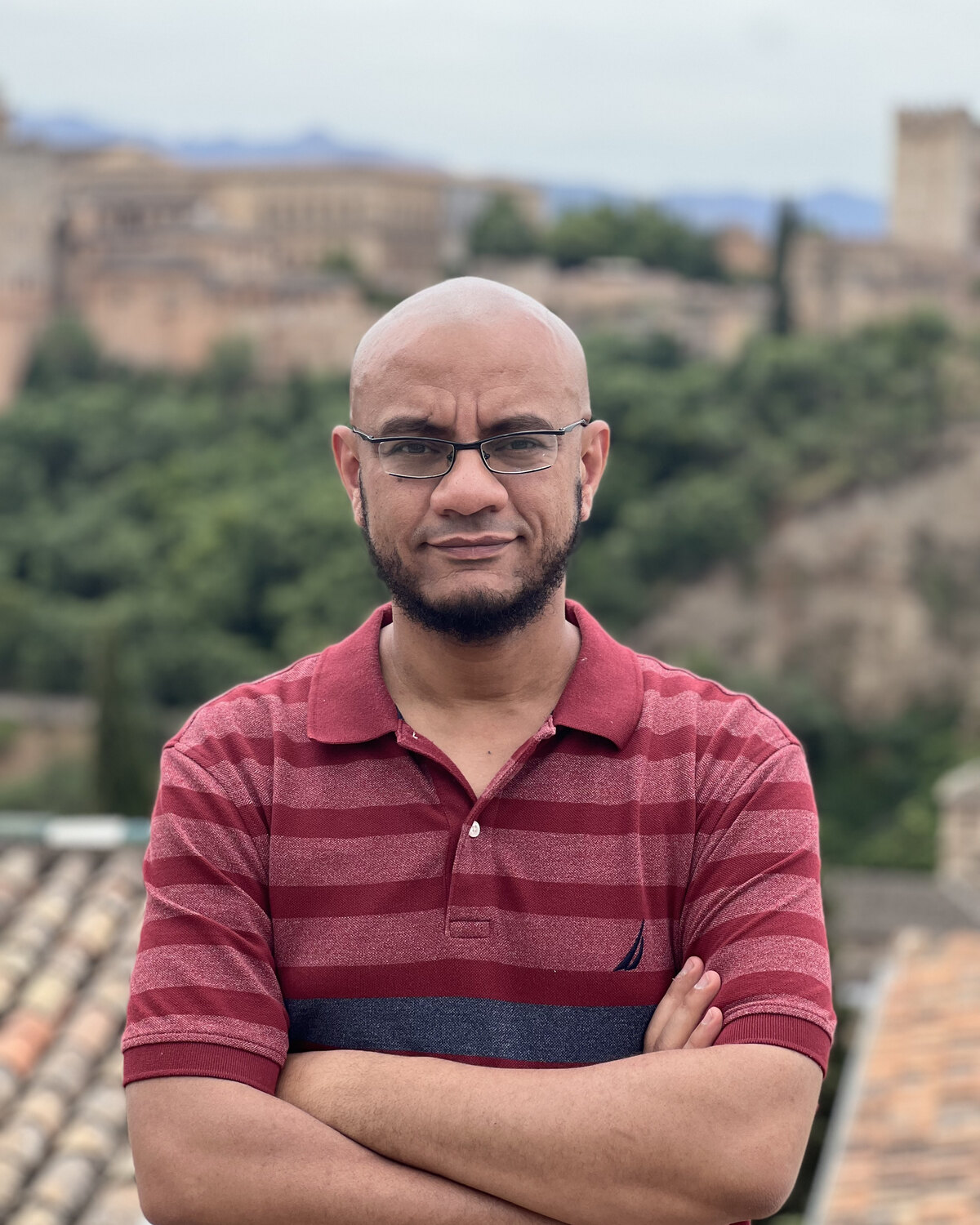
A builder — of companies, of ideas, of people, of futures.
Born in Egypt and having spent the majority of his adult life in the United States, Dr. Aly embodies a lived synthesis that is rarely articulated with clarity: that one can be both deeply committed to Islam and fully invested in the American project — not in theory, but in practice, through family, work, civic participation, and community leadership.
Professionally, he is an entrepreneur and systems thinker who has spent years building platforms, frameworks, and ventures at the intersection of intelligence, decision-making, and real-world execution. His work, including The Trinity of Intelligence, reflects a disciplined effort to bridge philosophy and execution — designing systems that not only perform, but learn, explain, and align with human purpose.
Beyond his professional work, he has been deeply involved in youth development across decades — in Scouting, in Tarbiya initiatives, in youth halaqas, and in structured programs that emphasize discipline, responsibility, service, and character formation. He views youth not as a passive audience to be guided, but as the primary long-term investment of any community.
At the center of his life — quietly but decisively — lies a deep relationship with the Qur’an, expressed through memorization (Hifdh), reflection, and continuous engagement with its meanings. The Qur’an is not, in his life, a text to be referenced occasionally; it is a living framework that shapes how he thinks, how he prioritizes, and how he engages with others. This series emerges from countless real conversations with neighbors, colleagues, and friends — not as an abstract intellectual exercise, but as a response to real questions asked by real people over many years.
One verse. One paragraph. One quiet thought.
A short letter from Dr. Aly, every Sunday. Drawn from a single verse of the Qur’an and a paragraph from one of the books. Sent in his own voice. Read in three minutes.
Most subscribers, by week six, find that the conversation has begun to walk into their week with them.
No volume of email beyond the Sunday letter. Unsubscribe at any time, with no friction.
Thank you — you’ve been added to the list. The first letter arrives this Sunday.
Dear neighbor,
سَنُرِيهِمْ آيَاتِنَا فِي الْآفَاقِ وَفِي أَنفُسِهِمْ
“We will show them Our signs in the horizons, and within themselves...” · Qur’an 41:53
The verse names two libraries. The horizons — the world outside the window. And the self — the world inside the chest. Most weeks we read one and ignore the other. The instruction here is to read both, slowly, and to notice that they say the same thing.
From Islam, Reason, and Science · Volume Nine. The chapter on Ibn al-Haytham, who treated the same instruction as a scientific method. We will return to him on Wednesday.
— Mohamed
Before any of this is asked of you, read a page.
The conversation between Muslims and our American neighbors has not, until very recently, had the kind of patient and unhurried space in which it could actually be carried out. We have shouted across newsrooms. We have argued across dinner tables. We have, on rare and beautiful occasions, listened. But we have not, in any sustained and patient way, sat down together and explained what we actually believe, what we actually want, and what we actually find ourselves — in the third decade of this American century — quietly hoping for, in the lives of our children and our neighbors’ children alike.
This series is one small attempt to provide what was missing. It is not a debate. It is not an argument with anyone. It is not, in any sense, a sales pitch for a religion. It is, simply, the explanation a Muslim Engineer in Plano, Texas would offer his neighbor — if his neighbor knocked on the door, accepted a glass of iced tea, and said, “Tell me, honestly, what you actually believe.”
The iced tea is on the table. The afternoon is long. The conversation begins.
Send me the rest. Tell me where to begin.
The full first chapter — front matter, the author’s note, the introduction — arrives the moment you press send. A few quiet questions help the Sunday letter meet you where you are. Only the first two are required.
A free PDF of Volume One, for the people you serve.
If you lead a mosque, a Muslim student association, or any community space where the question “What do Muslims actually believe?” gets asked — we will send you a complimentary digital copy of Volume One. Read it. Recommend it, if it serves. Hand it to a congregant who is preparing for a hard conversation with a non-Muslim neighbor.
This is a $0 channel that exists because the secondary audience — Muslims themselves — are often the ones who hand the book to the primary audience: their neighbors.